Why AI matters for SEO ranking in 2026
AI Overviews, AI Mode and ChatGPT now answer questions before anyone clicks. Here is what changed, why it affects your rankings, and what Singapore businesses should do about it.
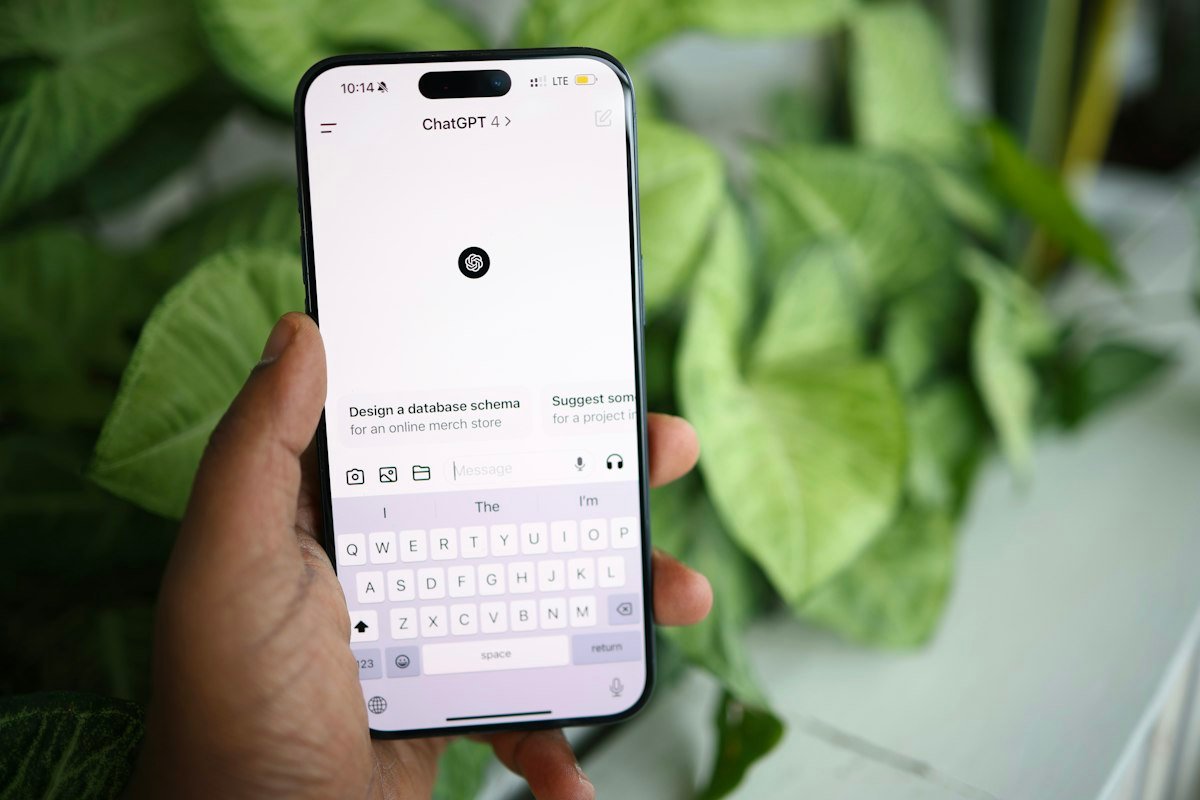
A few years ago, ranking on Google meant one thing: get your page into the top ten blue links. In 2026, a growing share of searches end before anyone sees those links. Google writes an answer at the top of the page, and tools like ChatGPT and Gemini answer the question directly. If your business isn’t part of those answers, you’re invisible to a large and growing group of customers, even if you still “rank”.
This guide explains what changed, why AI now matters for ranking, how AI systems decide which businesses to mention, and the practical steps Singapore businesses can take today. No hype, just what the evidence shows.
- AI answers are now mainstream: Google says AI Overviews reach over 2.5 billion people a month, and AI Mode passed 1 billion monthly users in 2026.
- When an AI summary appears, people click fewer links. Pew Research found clicks on regular results fell from 15% to 8% of visits.
- Google says there is no special trick or markup for AI features. Pages still need to be indexed, crawlable and genuinely useful.
- Pages with clear answers, real statistics and cited sources are more likely to be quoted by AI engines, according to the research that coined “GEO”.
- The businesses that win are the ones AI can understand, trust and quote, which is good SEO done properly, plus a few new habits.
What changed: search now answers before it links
Search engines used to point you to answers. Now they write the answer themselves. Google’s AI Overviews summarise the results at the top of the page, AI Mode lets people have a full conversation with Search, and standalone assistants like ChatGPT and Gemini answer questions without a search results page at all.
The scale is no longer experimental:
- At Google I/O in May 2026, Google said AI Overviews had passed 2.5 billion monthly users (Google, May 2026).
- In its Q2 2026 results, Alphabet said AI Mode surpassed 1 billion monthly active users and the Gemini app reached 950 million monthly users (Alphabet, July 2026).
- OpenAI announced that ChatGPT reached 900 million weekly active users in February 2026 (TechCrunch, February 2026).
For a Singapore business, the important point is that Google remains the main gateway. Statcounter’s data puts Google at roughly nine in ten searches in Singapore (Statcounter, 2026). So the AI layer isn’t replacing Google for your customers. It’s being added on top of the search results they already use.
Why AI matters for ranking (even if you’re on page one)
Ranking on page one is no longer the same as getting the click. When an AI summary answers the question, fewer people scroll down to the links underneath, including yours.
Pew Research Center tracked the real browsing of about 900 US adults in March 2025 and found that when a Google AI summary appeared, people clicked a regular search result on 8% of visits, compared with 15% when there was no summary. They were also more likely to end their session altogether: 26% of visits with a summary ended without any click, versus 16% without one. Only about 1% of visits included a click on a link inside the summary itself (Pew Research Center, July 2025).
| Behaviour on Google (Pew, March 2025) | With AI summary | Without AI summary |
|---|---|---|
| Clicked a regular search result | 8% of visits | 15% of visits |
| Ended the browsing session | 26% of visits | 16% of visits |
| Clicked a source inside the summary | 1% of visits | n/a |
Two honest caveats: this was a US study, and Google disputes the methodology. But the direction is clear, and it matches what many businesses see in their own analytics. There are fewer, more competitive clicks, and more of the decision happens inside the AI answer.
That changes the goal of SEO. It’s no longer just “rank high”. It’s “be the business the answer is built from”, so that even when people don’t click, they see your name, your numbers and your expertise.
How AI systems decide which businesses to mention
AI search tools mostly build answers from pages that already rank well and are easy to understand and quote. They don’t invent a separate internet. They retrieve pages, pull out the most useful passages, and summarise them.
Google is direct about this. Its documentation says there are “no additional requirements to appear in AI Overviews or AI Mode, nor other special optimizations necessary”, and that a page “must be indexed and eligible to be shown in Google Search with a snippet”. It also states you don’t need new AI text files or special schema markup (Google Search Central, updated December 2025).
What makes one page more “quotable” than another? The academic paper that introduced the term Generative Engine Optimisation (GEO) tested this across 10,000 queries. Researchers from Princeton, Georgia Tech, the Allen Institute for AI and IIT Delhi found that adding citations, quotations from relevant sources and statistics boosted a page’s visibility in AI-generated answers by up to 40% in their experiments (Aggarwal et al., KDD 2024). That’s a best-case lab result, not a guarantee, but it points to the same principle: AI favours content that sounds like evidence, not marketing.
What this means for Singapore businesses
For most Singapore SMEs, AI search raises the bar on trust rather than replacing SEO. Customers here research carefully. They compare quotes, check reviews and ask questions like “best aircon servicing in Tampines” or “how much does office reinstatement cost in Singapore”. Those are exactly the kinds of questions AI tools now answer directly.
That has three practical consequences:
- Thin service pages lose. A page that says “We provide quality cleaning services at affordable prices” gives an AI nothing to quote. A page that explains what’s included, typical price ranges, timelines and areas served gives it plenty.
- Your reputation off your website counts. AI answers draw on reviews, directories, news mentions and forums, not just your site. Consistent business details and genuine mentions help AI tools recognise you as a real, established business.
- Local intent still runs through Google. With Google handling most searches in Singapore, your Google Business Profile, local pages and reviews remain the foundation. AI features sit on top of that foundation; they don’t replace it.
If you’re unsure how SEO, paid ads and AI optimisation fit together, our guide to SEO vs SEM vs GEO breaks down the differences and where to start.
7 practical steps to stay visible in AI search
The good news: you don’t need a new marketing strategy, you need a sharper version of good SEO. These are the steps we prioritise for clients.
1. Fix the technical basics first
If Google can’t crawl or index a page, no AI feature will use it. Check that your important pages are indexed in Google Search Console, load quickly on mobile, and aren’t blocked by robots.txt or “noindex” tags.
2. Answer the question in the first two sentences
Structure each important section so the answer comes first and the detail follows. AI tools extract passages, so a section that opens with a clear, complete answer is far easier to quote than one that builds up slowly.
3. Publish real proof, not adjectives
Replace “affordable” and “professional” with specifics: price ranges, turnaround times, number of projects, certifications and before-and-after results. Specific, verifiable facts are what the GEO research found AI engines prefer to surface.
4. Cite your sources
When you mention a regulation, a statistic or an industry figure, link to the original source. It builds trust with readers and matches the “citations and statistics” pattern that improved AI visibility in testing.
5. Keep your business details consistent everywhere
Your name, address, phone number, opening hours and services should match across your website, Google Business Profile, Facebook and directories. Consistency helps both Google and AI tools confidently connect all the information to one business.
6. Earn mentions on trusted sites
Features in local media, industry associations, supplier pages and genuine customer reviews all strengthen how your brand is understood. AI answers often cite third-party pages, so being mentioned there matters as much as your own website.
7. Measure what AI is saying about you
Once a month, ask ChatGPT, Gemini and Google’s AI Mode the questions your customers ask and note whether you’re mentioned, how you’re described, and which competitors appear. In Google Analytics, watch referral traffic from sources like chatgpt.com and perplexity.ai. It’s still small for most businesses, but it’s growing and tends to be high-intent.
For a deeper look at how optimising for AI answers differs from traditional SEO, read GEO vs SEO: what’s the difference?
A 15-minute AI visibility check you can do today
You can get a useful snapshot of your AI visibility without any special tools. Set aside fifteen minutes and work through these steps:
- List five questions your customers ask before buying. For example: “best [your service] in Singapore”, “how much does [your service] cost”, “[your service] vs [alternative]”.
- Ask each question in Google, Google AI Mode, ChatGPT and Gemini. Note whether an AI answer appears, whether your business is named, and which competitors or websites are mentioned or cited.
- Ask directly about your business. Try “What does [your business name] do?” and “Is [your business name] reliable?” Check whether the description is accurate and up to date.
- Look at what gets cited. If AI answers keep citing a directory, a review site or a competitor’s guide, that tells you where your content or presence is missing.
- Write down three gaps. Typical ones are missing prices, outdated business details and no page answering a common question. These become your to-do list.
Repeat the check monthly. AI answers change often, so trends over a few months tell you more than a single result.
What not to do
Avoid shortcuts that promise “AI rankings”. A few common mistakes we see:
- Buying special “AI schema” or AI files as a quick fix. Google explicitly says no special schema or AI text files are needed to appear in its AI features. Structured data is still useful for understanding your pages, but it isn’t a magic switch.
- Mass-producing AI-written pages. Publishing hundreds of near-identical pages to manipulate rankings falls under Google’s spam policies on scaled content abuse. Use AI to help you work faster, not to replace genuine expertise.
- Ignoring SEO because “AI is taking over”. AI features are built on top of search results. Weak SEO means weak AI visibility.
We’ll check how Google and the main AI assistants currently describe your business and show you the gaps, with no obligation.
Frequently asked questions
Is SEO dead because of AI?
No. AI features in Google are built on its search index, and Google says pages must be indexed and eligible for a snippet to appear in AI Overviews or AI Mode. SEO has become more demanding because there are fewer clicks to win, but it remains the foundation of being found.
Can I pay to appear in ChatGPT or Google’s AI Overviews?
You can’t buy organic mentions inside AI answers. Google does show ads in and around some AI experiences, which falls under paid search (SEM). Organic visibility in AI answers comes from being a trusted, clearly described and well-cited source.
How long does it take to improve AI visibility?
It usually follows your SEO timeline. Technical fixes and clearer content can be picked up within weeks of being re-crawled, while building reputation and third-party mentions takes months. Be wary of anyone promising guaranteed AI placements.
Does this matter for small local businesses in Singapore?
Yes, arguably more than for large brands. Local customers ask AI tools for recommendations, prices and comparisons. Small businesses with clear, specific, trustworthy information can stand out against bigger competitors with vague websites.
The bottom line
AI hasn’t replaced search. It has raised the standard. With AI Overviews reaching billions of people and fewer clicks to go around, the businesses that win are the ones AI can easily understand, trust and quote.
- Get the technical SEO basics right so your pages can be found.
- Write answer-first content full of specific, sourced facts.
- Build a consistent, credible presence beyond your own website.
Start with your most important service page this week, and if you’d like a second pair of eyes, talk to our team about a free audit. You can also explore our SEO, Google Ads and GEO services.